
A Fast Decision Isn’t Always a Good Decision
Strong leaders know when to move quickly and when a decision deserves more thought. Good judgment means understanding the risk, asking better questions, and knowing when speed helps or hurts.

Strong leaders know when to move quickly and when a decision deserves more thought. Good judgment means understanding the risk, asking better questions, and knowing when speed helps or hurts.

When senior leaders are not aligned on priorities, the conflict gets pushed down to managers and employees. Here’s how leadership teams can resolve competing expectations before they create confusion across the organization.
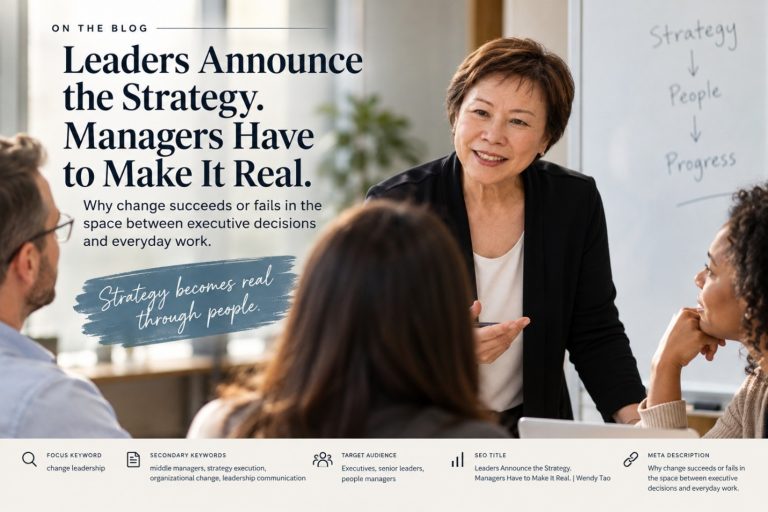
A strategy may be decided at the top, but employees experience it through their manager. Strong execution requires more than communication. Managers need the clarity, context, authority, and capacity to turn strategy into everyday action.

AI can dramatically increase speed and capacity, but faster output does not automatically create better decisions. The real leadership advantage is knowing where AI adds value, where human judgment matters most, and what deserves attention.

When every request becomes urgent, teams stop prioritizing and start reacting. Strong leaders know how to separate real urgency from noise, make tradeoffs clear, and keep people focused on what matters most.
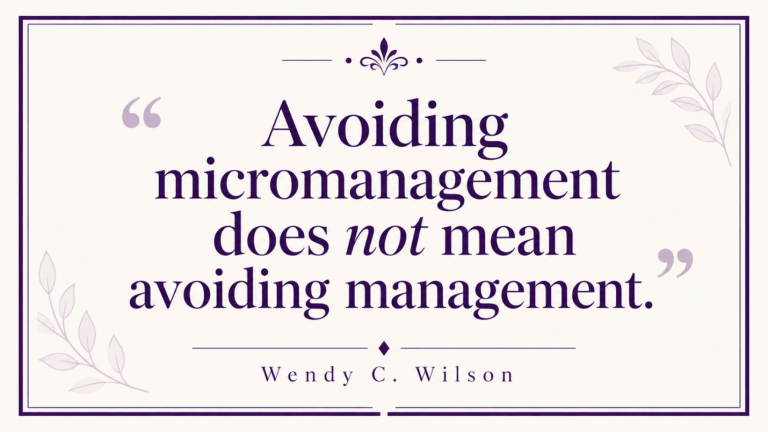
Great leadership is not about controlling every step. It is about giving people enough trust to think and decide, while staying clear about ownership, expectations, and results.

Great leadership is not about making yourself indispensable. It is about building a team that can think, decide, solve problems, and keep moving when you are not in the room. If everything stops when you leave, that is not a sign of strong leadership. It is a sign that too much depends on you.
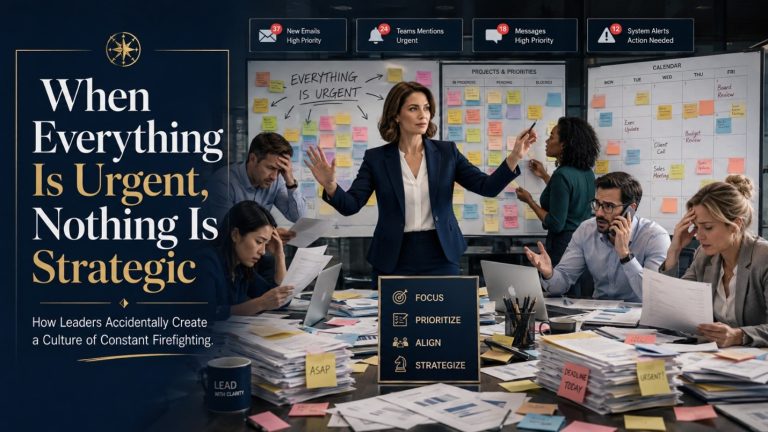
When every request becomes urgent, teams can spend their days reacting instead of making meaningful progress. Strong leaders create clarity around what deserves attention now, what can wait, and what should not be consuming the team’s time at all.

A quiet team is not necessarily an aligned team. When employees stop raising concerns, challenging assumptions, or sharing bad news, leaders can become the last people to know there is a problem. Here’s how strong leaders create a culture where people are willing to speak up.

Resilience is not something we suddenly find during a crisis. It is built through the habits, boundaries, relationships, and decisions we practice long before adversity arrives. Here are five ways leaders can strengthen that capacity before they need it most.

Years of experience can make leaders more capable, but experience alone does not guarantee growth. Strong leaders remain curious, challenge their assumptions, welcome new perspectives, and apply what they learn.

Peak performance gets attention, but your performance floor determines how well you keep moving when life becomes difficult. Learn how small, protected habits create sustainable high performance.

Credible leaders do not need to have every answer. They create clarity by telling the truth about what is known, identifying immediate priorities, explaining how decisions will be made, and communicating consistently as circumstances change.

High performers are often praised for carrying more than others, but what leaders do not see can quietly damage focus, trust, energy, and retention. This article explores why performance issues are not always skill issues, and why leaders need to pay attention to the invisible burdens people bring to work.
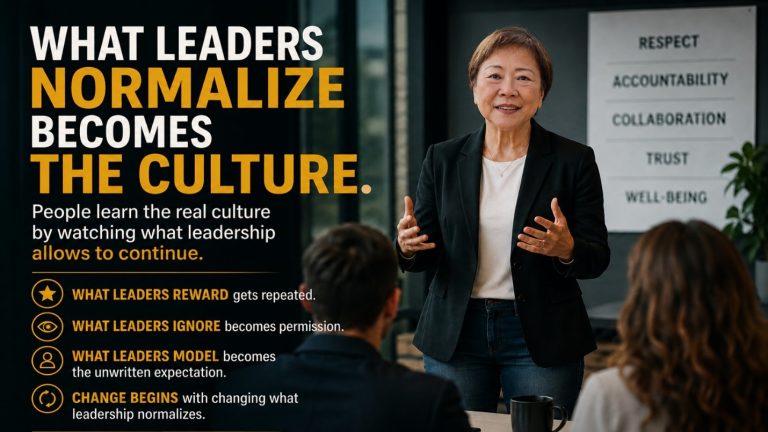
Employees learn the real culture by watching what leadership allows to continue. What leaders reward, ignore, tolerate, and model becomes the organization’s unwritten standard.

Strong leaders are dependable, but dependability can quietly become over-responsibility. Sustainable leadership means knowing what to carry, what to delegate, and when to seek support.
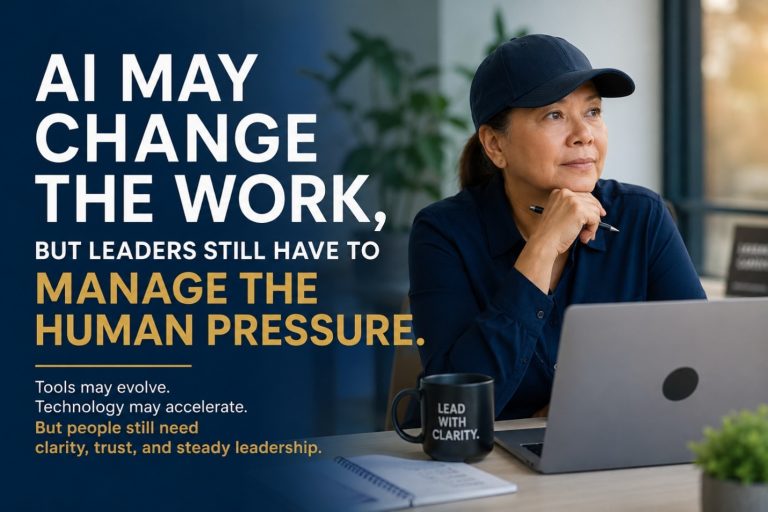
AI may change tasks, workflows, and expectations, but it does not remove the need for steady human leadership. During rapid change, people need clarity, trust, support, and leaders who understand the pressure behind adaptation.

High performers are often the first people leaders rely on when the pressure rises. But the people who care deeply and deliver consistently do not need another push. They need recovery built into the way they work.

A tired team is not always disengaged. Sometimes people are reacting to a pace that gives them no room to think, recover, prioritize, or do quality work without sacrificing themselves.

Resilience is often treated like a trait some people naturally have. In leadership, it is something more practical. It is a set of behaviors leaders practice under pressure, especially when their teams need steadiness most.
Rebuilding does not always look like a dramatic life overhaul. Sometimes it looks like finally admitting you are tired. Not the kind of tired a good night’s sleep can fix. The kind that comes from years of pushing, performing, carrying, and telling yourself you are fine. If something in that sentence landed, this post is for you.
There was a period in my career when I became a different leader without knowing it. I was still showing up, still delivering, but pressure was quietly narrowing the way I led. That narrowing is what this post is about.
People often ask me how I managed to keep going. Not after the hard things ended. During them. How I led a global team while navigating circumstances that would have justified stepping back entirely. That question, how do you lead effectively when your life is also hard, is the beginning of this series.
This is not a summary. It is a letter. Because what this series has been building toward is not a framework or a list of takeaways. It is a conversation I want to have directly with you. About the gap between knowing and doing. And the step that closes it.
You probably cannot point to the exact moment it started. The habit of avoiding the conversation that needs to happen. The instinct to over-prepare for every objection. The quiet dread of someone being upset with you. That is not a leadership style. That is survival mode wearing a leadership title. Here is how to change it.
You probably cannot point to the exact moment it started. The habit of avoiding the conversation that needs to happen. The instinct to over-prepare for every objection. The quiet dread of someone being upset with you. That is not a leadership style. That is survival mode wearing a leadership title. Here is how to change it.
There is a kind of knowing that cannot be taught in a leadership program. It comes from having been through something hard — and coming out the other side with your capacity for empathy not just intact, but deepened. Here is what adversity actually gives the leaders who face it honestly.
What if your exceptional performance and your private exhaustion come from exactly the same place? The high-functioning survivor is one of the most common, and least talked about, patterns in leadership today. Here is what it looks like, what it costs, and what changes when you finally see it.
For most of my career, I lived in two realities at once. On the outside: the trusted CFO, the composed executive, the one who delivered results. On the inside: still outrunning a past I had never fully faced. If you have ever led from that gap, this series is for you.
For most of my early career, the word “no” didn’t exist in my vocabulary, not because I didn’t feel it, but because I believed saying it made me look weak and uncooperative. Here’s what I learned after years of burnout, and the framework that finally changed everything.

Feeling undervalued can happen even to successful leaders. Here are 5 signs it’s happening, and 3 practical moves to fix it with clarity, scripts, and professionalism.

A simple 20-minute monthly review ritual to protect your energy, stop the leaks, and set one minimum standard that keeps you steady even in chaotic weeks.
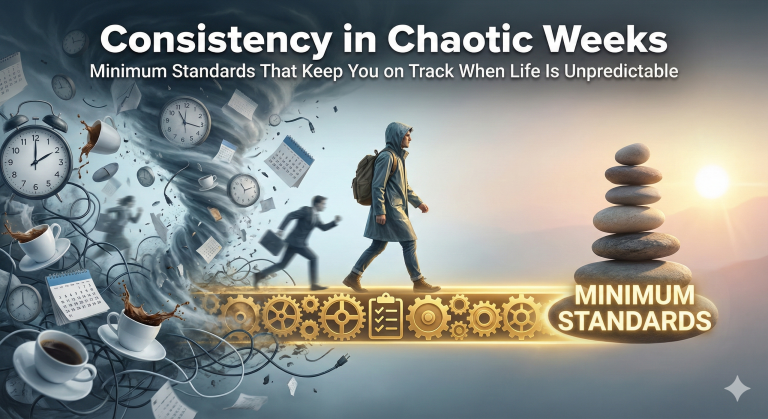
Chaotic weeks don’t require more discipline. They require a better plan. This post shows you how to set minimum standards, protect your calendar, remove friction, and use the “never miss twice” rule so you stay consistent when life is unpredictable.
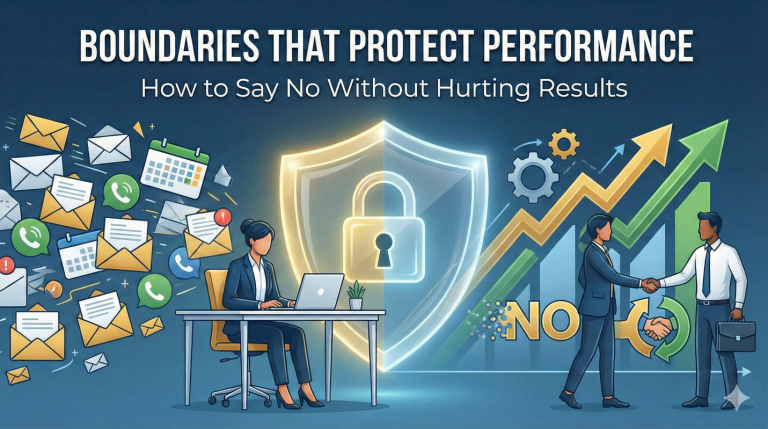
Boundaries are not self-care. They’re performance design. If you’re constantly available, saying yes too fast, and squeezing your priorities into whatever time is left, you’re not lacking discipline. You’re leaking energy. In this post, I break down three boundary types that protect results, calendar, communication, and commitments, plus simple scripts you can use this week to say no without hurting outcomes.
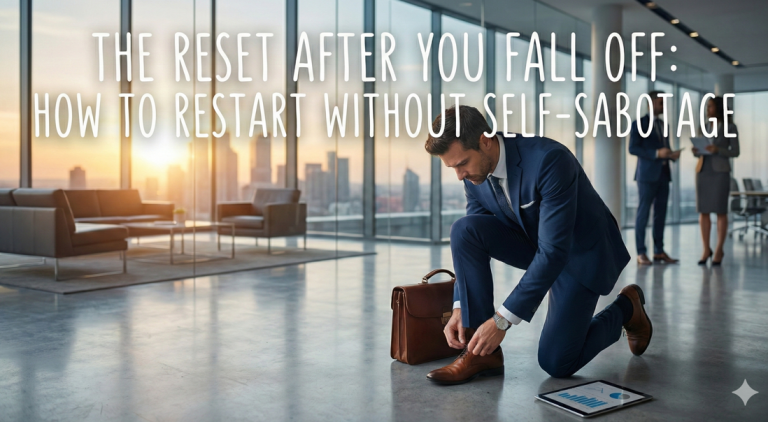
Falling off is normal. The real skill is returning fast without guilt, all-or-nothing thinking, or overcompensating. Here’s a simple reset protocol that works for high performers.
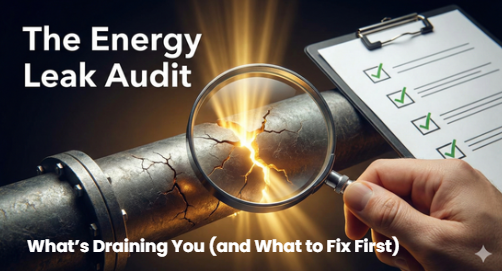
If your consistency keeps collapsing, it may not be discipline, it may be energy leaks. This post walks you through a simple audit to identify your biggest drains and fix the right thing first.

High performers don’t fall off because they’re weak. They fall off because their energy system can’t support the standard they’re trying to live at. This post shows you how to build a “consistency floor,” reduce energy leaks, and use a simple reset rule so you can follow through without burning out.

Courage at work rarely looks heroic. It looks like the steady decision to speak up, name the risk early, hold the boundary, and choose clarity over comfort. This post breaks down practical courage you can use immediately—without needing to be loud.
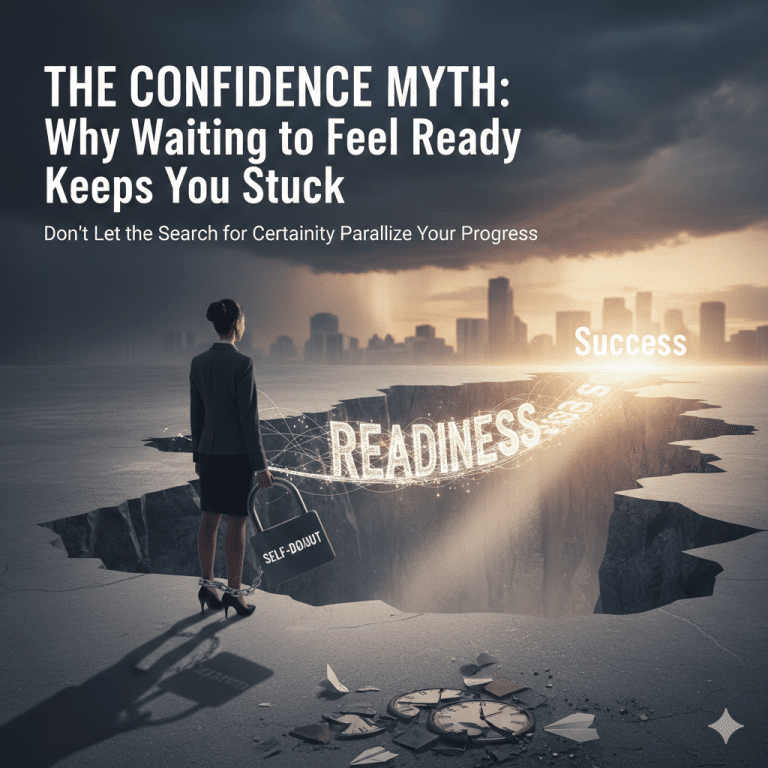
If you’ve been waiting to feel ready before you speak up, set the boundary, or take the next step, you’re not alone. This post breaks down why confidence comes after action, and how to build it through small, repeatable moves that create real self-trust.
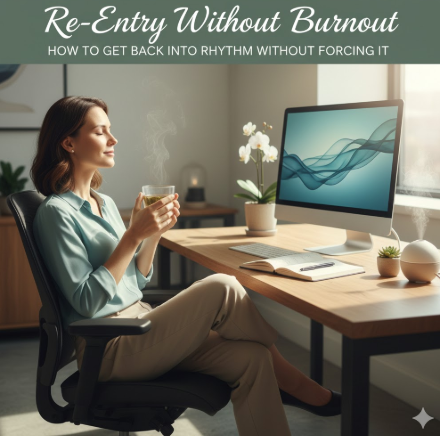
Coming back to work shouldn’t feel like a sprint. This post shows you how to re-enter with intention—using a simple 3-step reset to rebuild rhythm, protect your capacity, and lead yourself well before the pressure takes over.

Pressure fades, but dignity doesn’t. How leaders close the year shapes trust, culture, and how teams enter the next season.

This year required a kind of strength many leaders didn’t choose. A reflection on leadership, resilience, and what must be released before the next season.
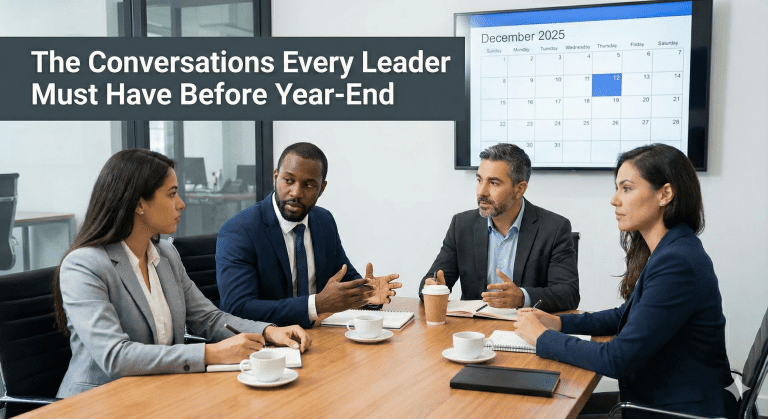
The most valuable year-end conversation I had with my team didn’t reveal a strategy issue; it revealed a blind spot in my leadership.
And fixing it changed how we ended that year!
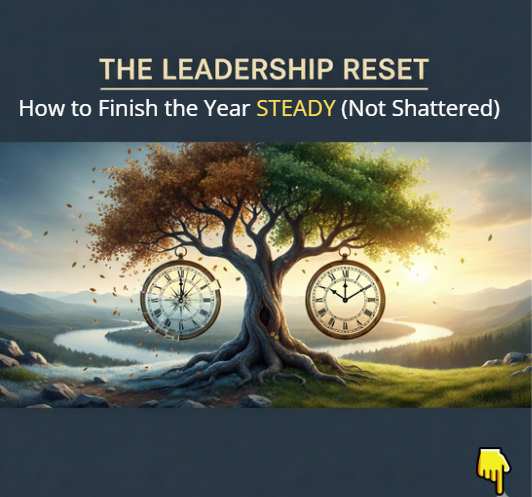
December does something to people, even strong, capable, resilient people. As the calendar winds down, pressure winds up.Leaders feel the weight of unmet goals, unfilled promises, crowded inboxes, year-end reviews, budget scrambles, and the growing sense that there’s more to do than time left to do it. Teams feel it too.Everyone is juggling personal obligations,…

By Wendy C. Wilson Crisis leaves marks.Even long after the announcements have been made, after the numbers settle, after everyone tries to “move on,” the emotional cost still lingers in the room. In reality, people don’t bounce back on command. They don’t automatically trust again. They don’t magically regain motivation just because the crisis has…

By Wendy C. Wilson The Moment the Direction Arrives After a crisis, the email finally lands: the board has set the course, the C-suite has agreed on priorities, and the next twelve months are mapped at a high level. The direction is clear. The mandate is firm. I remember standing in a conference room with…

By Wendy C. Wilson The Calm After the Storm Isn’t Always Calm When a company finally stabilizes after months of chaos, everyone expects relief.But what often follows isn’t relief, it’s emptiness. I’ve seen it more than once. After the last round of layoffs, after the reorganization, after the long nights of uncertainty, there’s a strange…

By Wendy C. Wilson Last week, I wrote about renewal, how teams begin to find steadiness again after a season of crisis.Remember, renewal isn’t the finish line. Once the calm returns, leaders face the next challenge: helping people believe in the work again.That’s where morale comes in. Crisis Changes More Than Numbers Crisis tests everything…
By Wendy C. Wilson Last week, I shared how trust becomes the anchor in times of crisis; how teams follow leaders who stay steady when everything else feels uncertain. But what happens after the storm? When the crisis finally quiets, leaders face a different kind of test, not how to survive the chaos, but how…
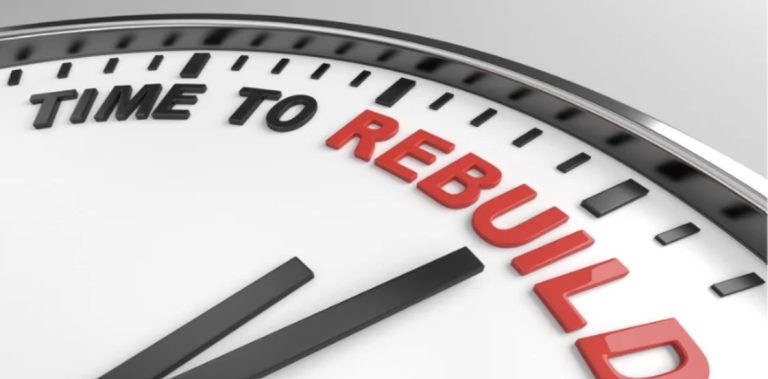
By Wendy C. Wilson When the Dust Settled The worst was finally over.The layoffs had stopped. The conference calls that began with dread were replaced by quiet sighs of relief. The office was thinner, quieter, and full of people trying to make sense of what came next. It was the aftermath of a long and…